A Friend Told Me They Were Going To Tear It Down Soon
I have been stopping in Buellton for twenty years. It is the place I break up the drive. Lunch at Industrial Eats, where the butcher case and the wood oven do most of the talking. A night at the Sideways Inn to split the trip home from Paso Robles into something civilized. And dinner at the Hitching Post II, which is one of the last old school steak and wine bars where you can sit down, order a Santa Maria style ribeye and a glass of their pinot, and feel like you are exactly where you should be. All images are captured with a Leica M11.
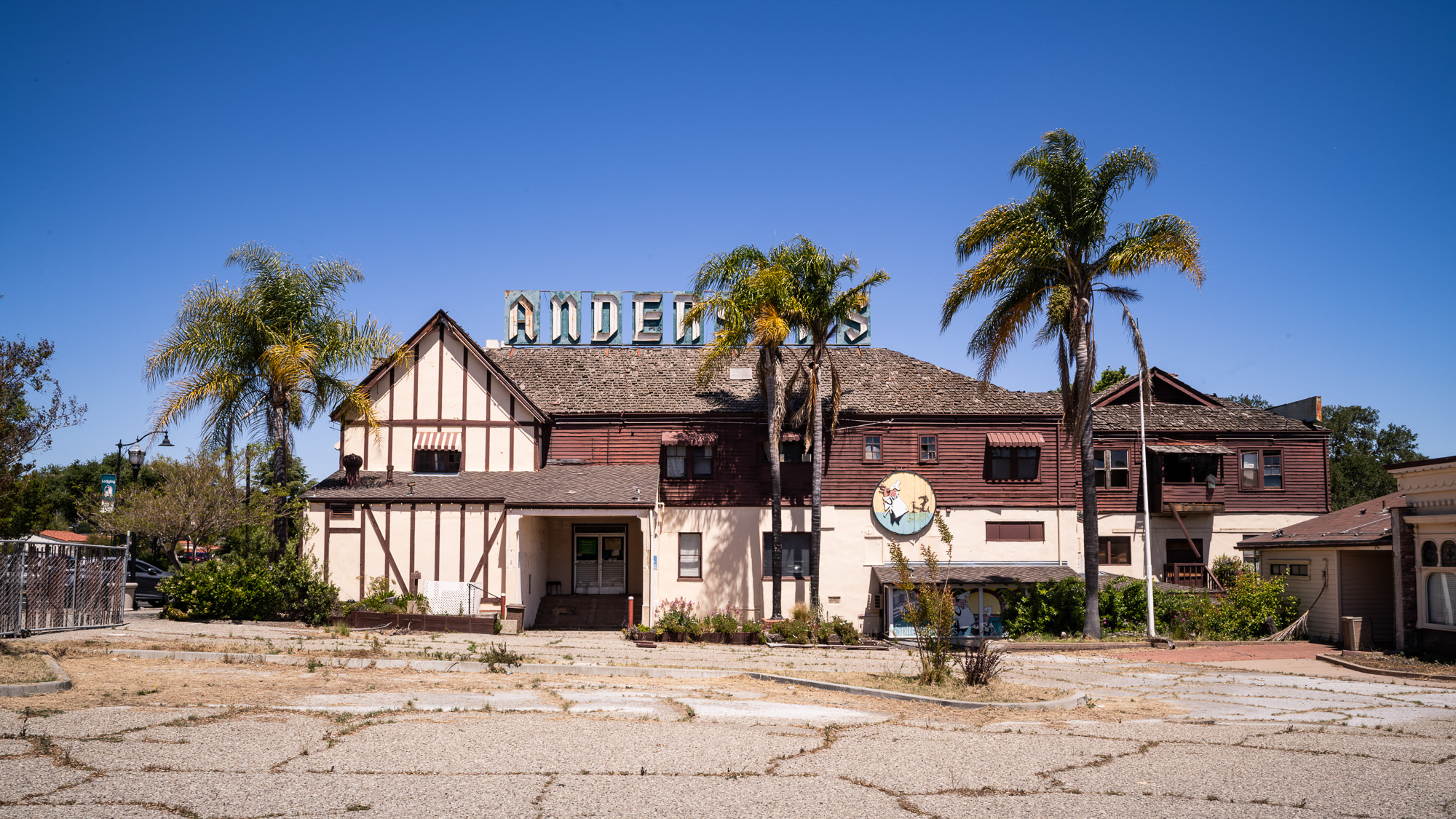
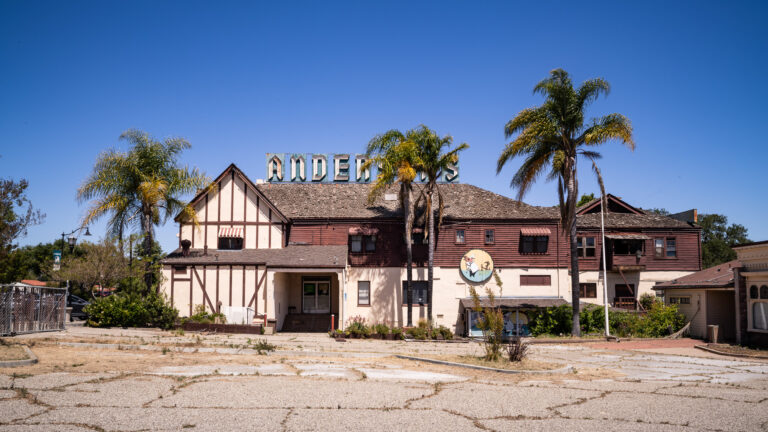
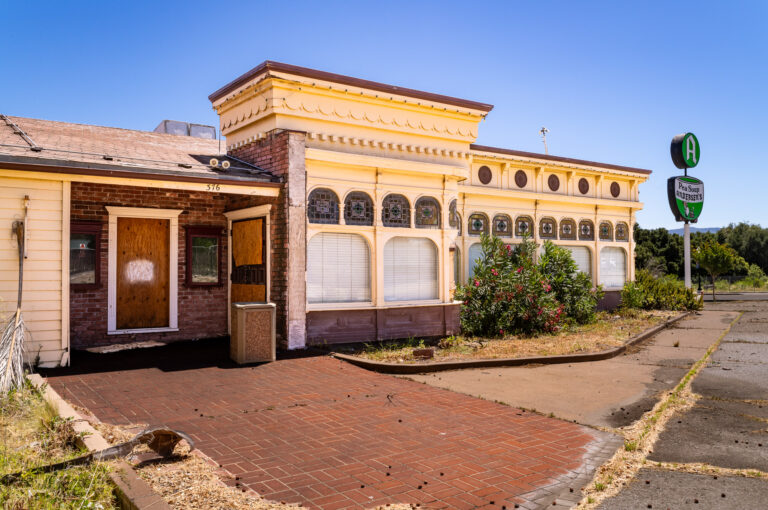
So I have passed Pea Soup Andersen’s a hundred times. It is right there at the crossroads, the way it always has been.
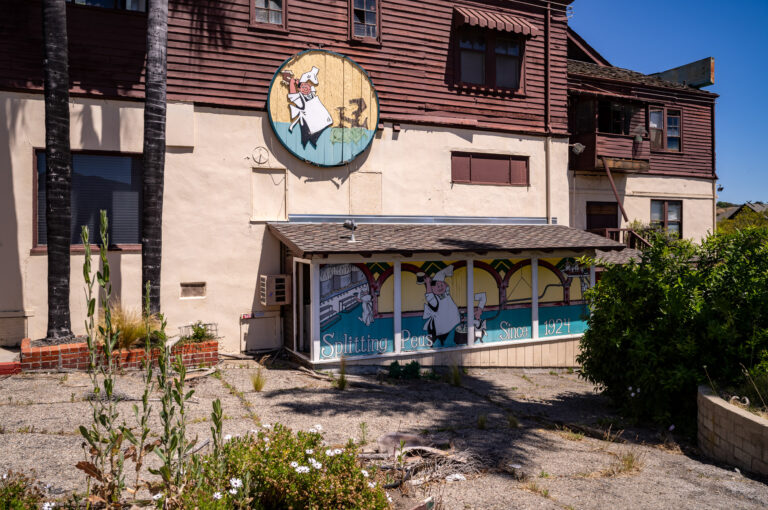
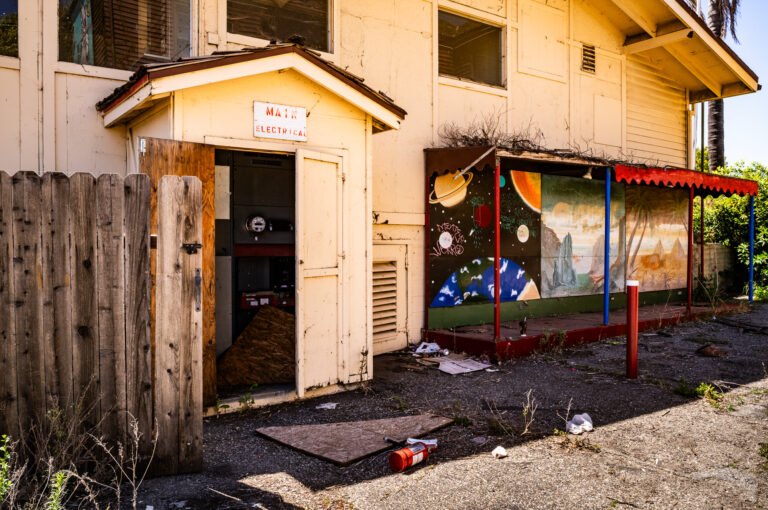
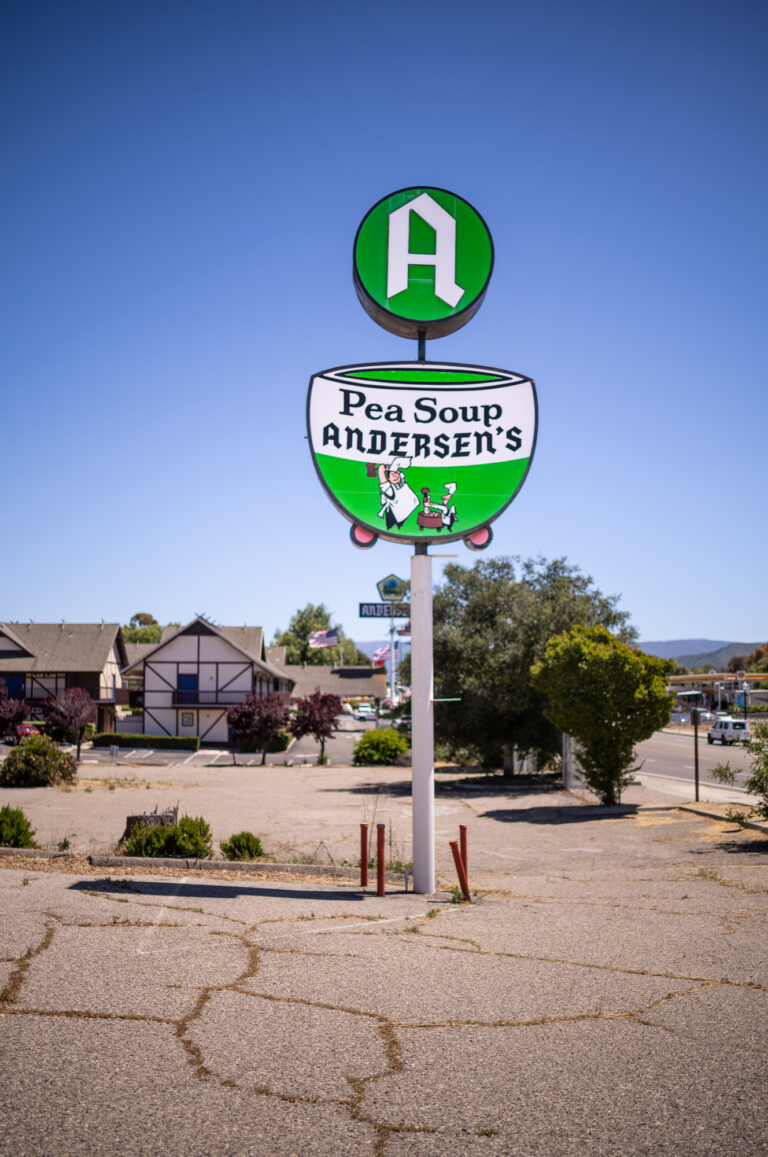
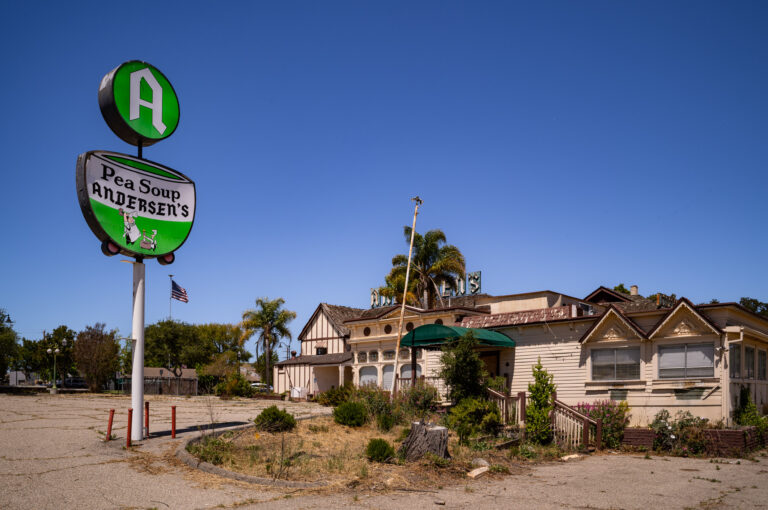
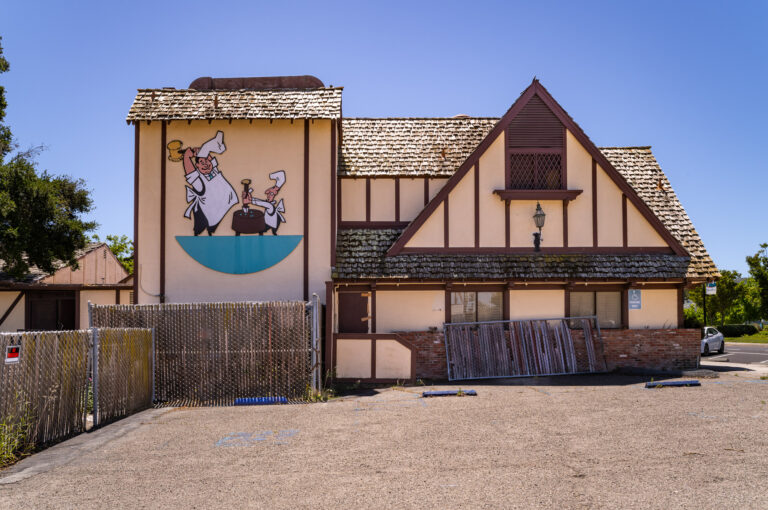
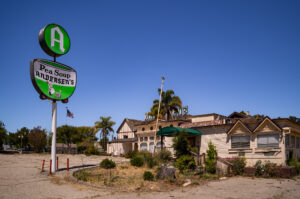
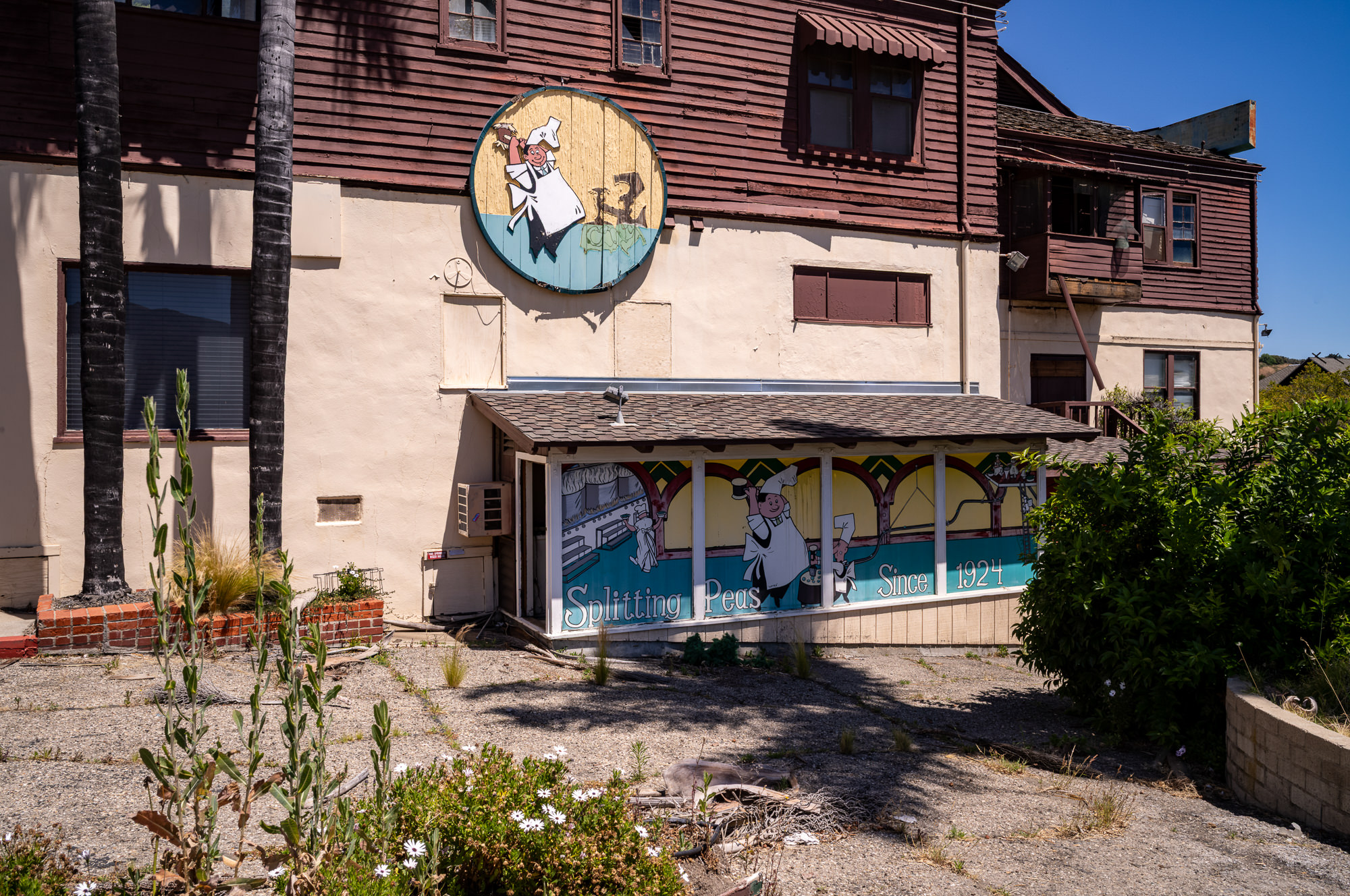
This time I pulled off with a purpose. I told myself I would shoot the exterior, the signs, the Hap-Pea and Pea-Wee murals, and be back on the road in twenty minutes.
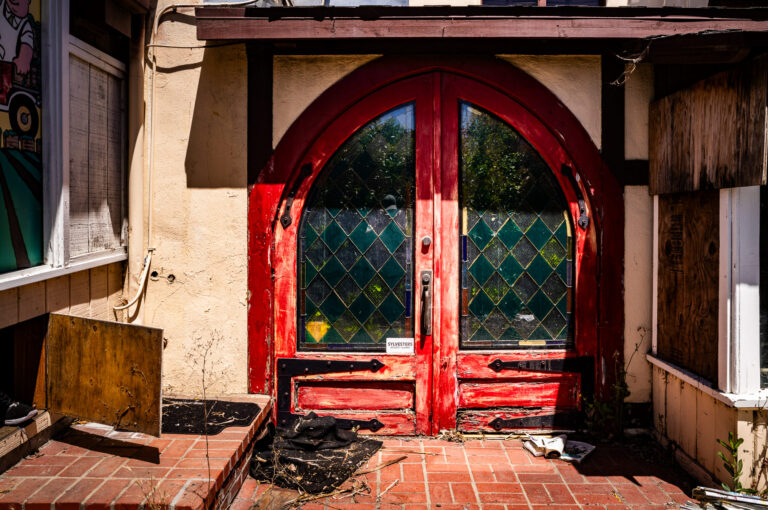
Then I walked around the side of the building and found the door open.
There were no signs posted. Nothing telling anyone to stay out. So I went in, and I stayed inside a disheveled and abandoned Pea Soup Andersen’s for an hour and a half.
The first thing I saw was a chair sitting on the stairs going up to the second floor. On the chair was an old plug in adding machine, the kind with the paper tape. A clipboard and loose papers were scattered down the steps around it. Somebody had been carrying things out and had simply stopped, mid task, and never come back.
The Home of Split Pea Soup
Anton Andersen was born in Denmark and trained in restaurants in Europe and New York. His wife Juliette was born in France. In 1924 they bought property in a small town in the Santa Ynez Valley and opened a place they named Andersen’s Electric Cafe, in honor of their proudest possession, a new electric stove. They opened on June 13 of that year and sold coffee, sandwiches, pancakes, simple things.
About three months in, Juliette added a split pea soup made from a recipe handed down through her family. That was the end of the sandwiches being the point.
What made them was geography. Their customers were the people driving the only real road between Los Angeles and San Francisco. Salesmen, tourists, truck drivers, and anyone heading up to Hearst Castle at San Simeon. There was almost nothing else out there. In 1928 the Andersens sank a well and built a hotel and a dining room, the Bueltmore, and the cafe stopped being a cafe and became a destination. By 1930 the place was reported to be serving more than four hundred bowls of pea soup a day.
Their son Robert came into the business in the 1930s after Stanford. He nicknamed himself Pea Soup Andersen, which became the restaurant’s name in 1947, and he put billboards up and down the length of California. He bought the rights to a cartoon showing two chefs splitting peas with a hammer and chisel, hired a Disney trained artist named Milt Neil to redraw them, and ran a naming contest that drew thousands of entries. The big one with the mallet became Hap-Pea. The small frightened one holding the chisel became Pea-Wee. In the early 1950s Art Clokey, who would go on to create Gumby, made stop motion commercials for them.
During the war the restaurant closed to the public and the hotel rooms housed military personnel. In the 1960s the family sold to Vince Evans, an actor who had been the bombardier on the Memphis Belle and who was a friend of another valley resident named Ronald Reagan. Under Evans the place bought fifty tons of peas a year. He built an aviary full of parrots and a train for children and, for two years, a miniature wild animal park.
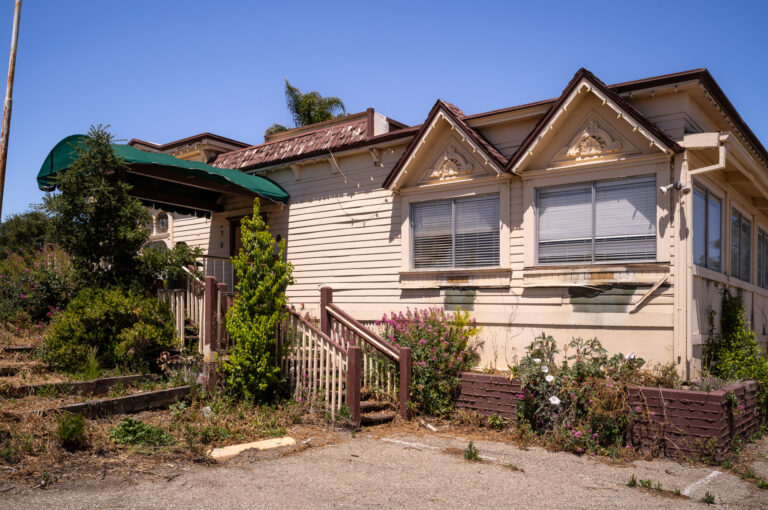
Then the highway moved. Then the pandemic came. In January 2024 a green sign went up on the front doors saying temporarily closed for redevelopment, five months short of one hundred years.
What Was Still Inside
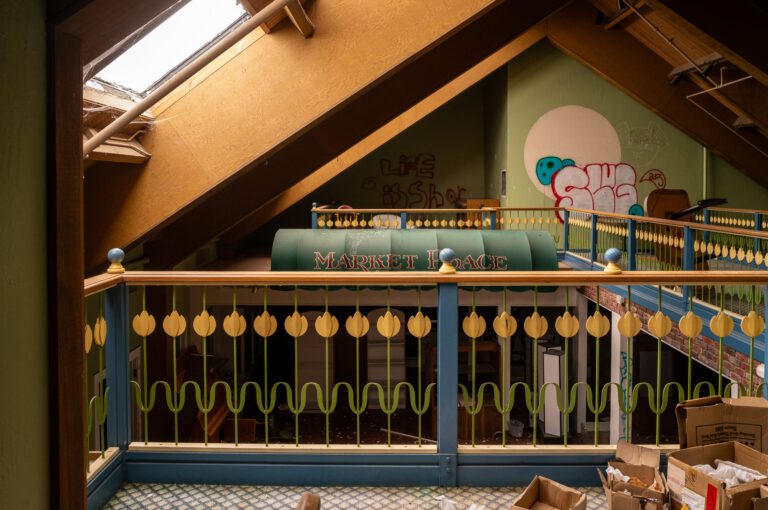
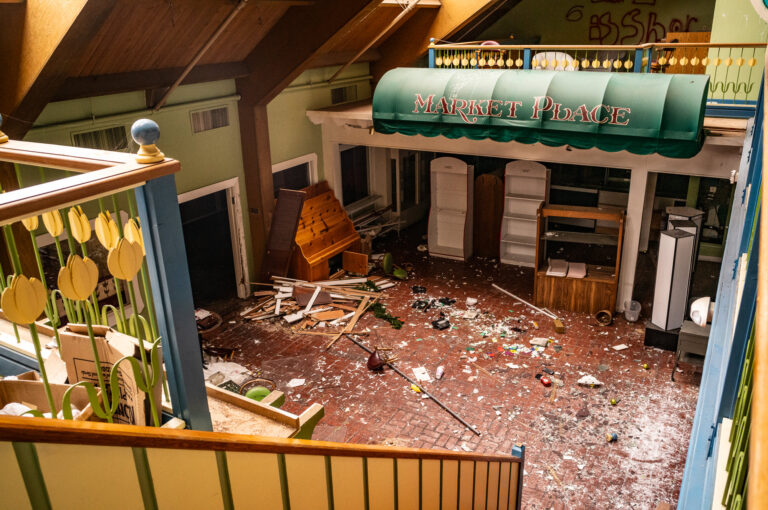
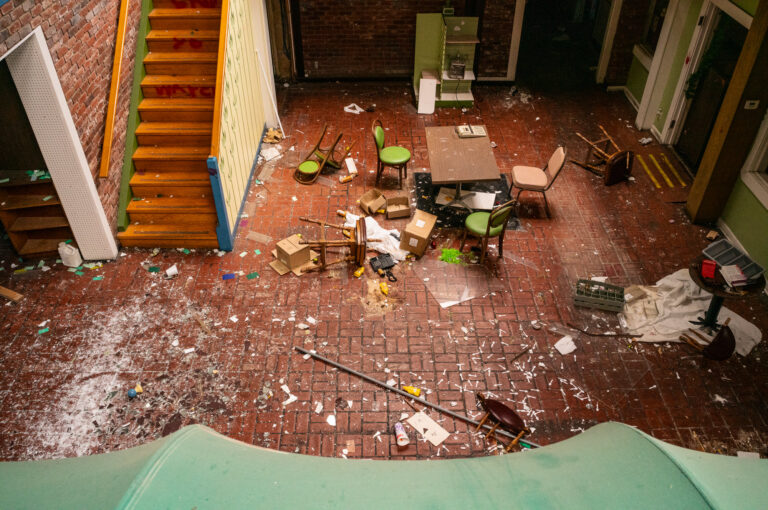
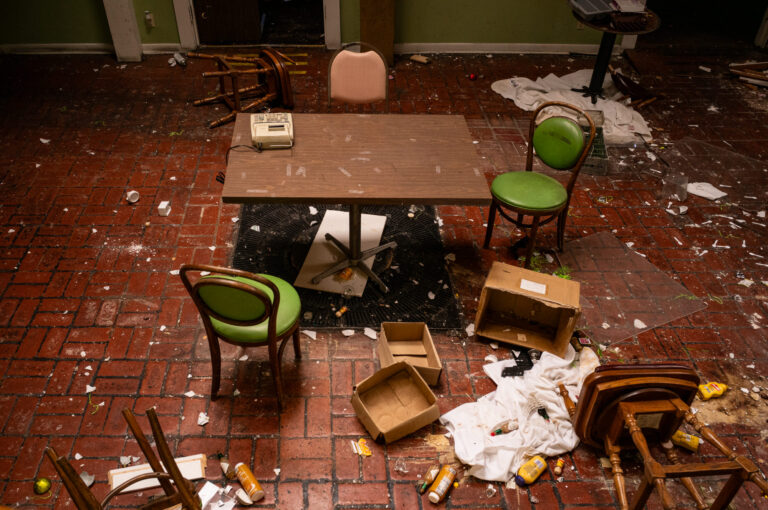
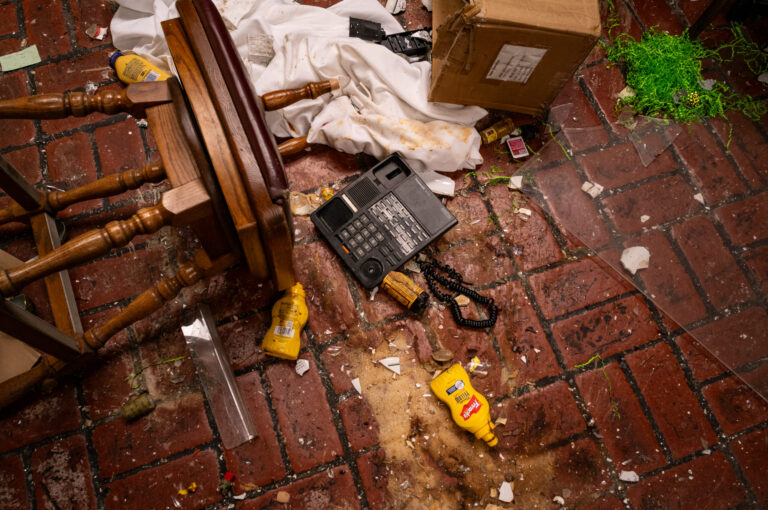
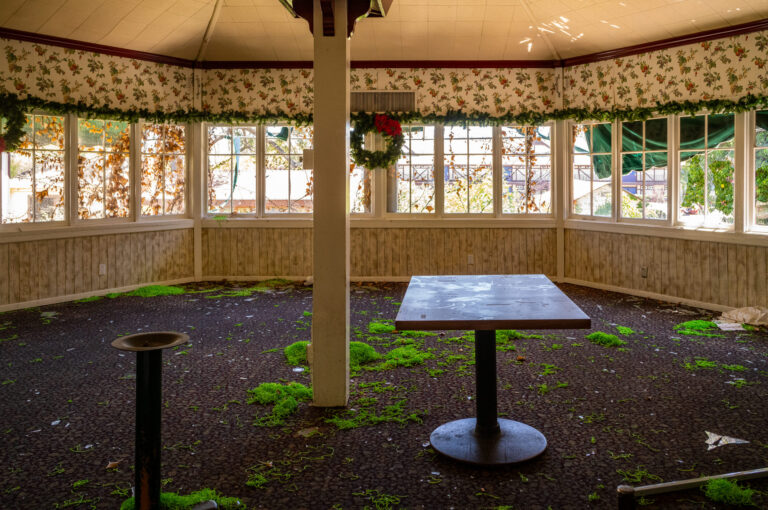
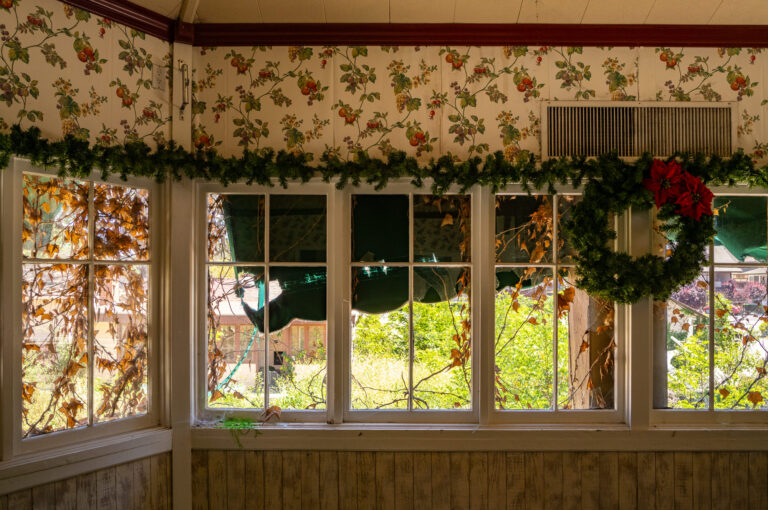
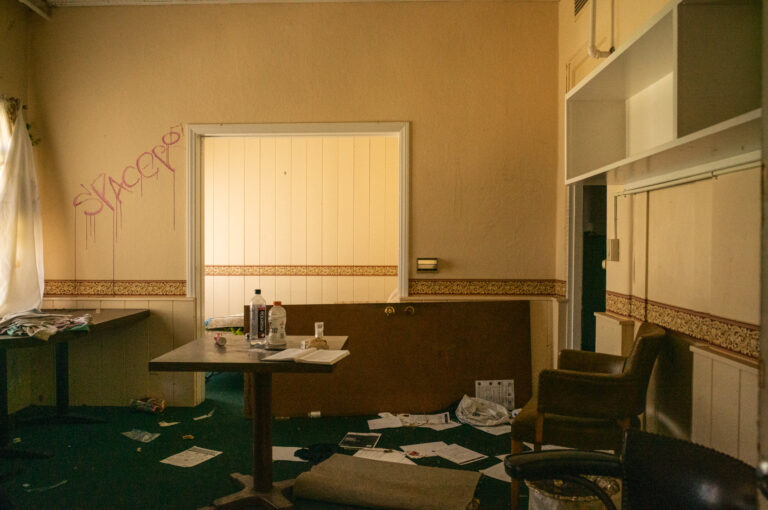
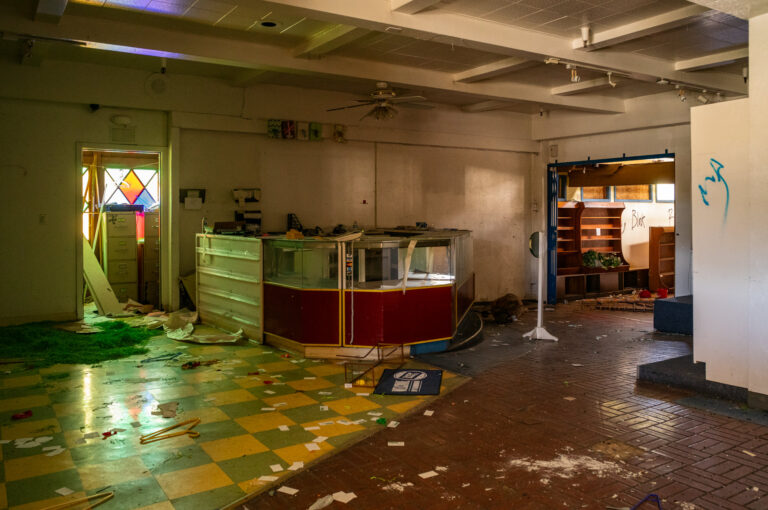
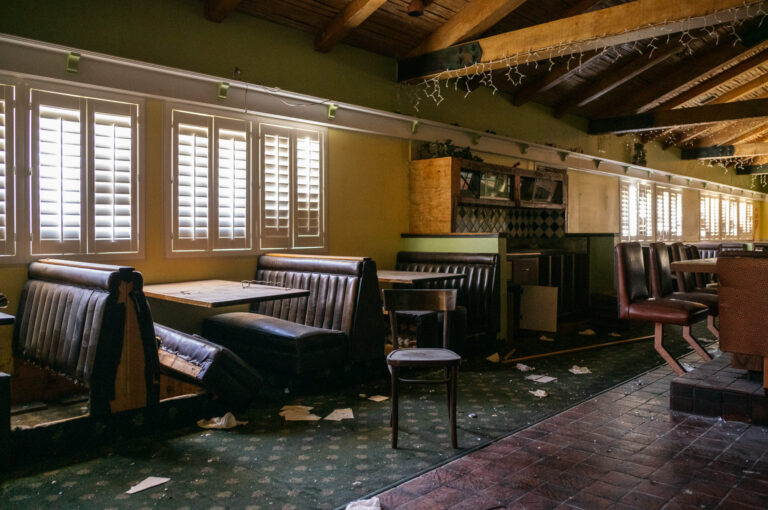
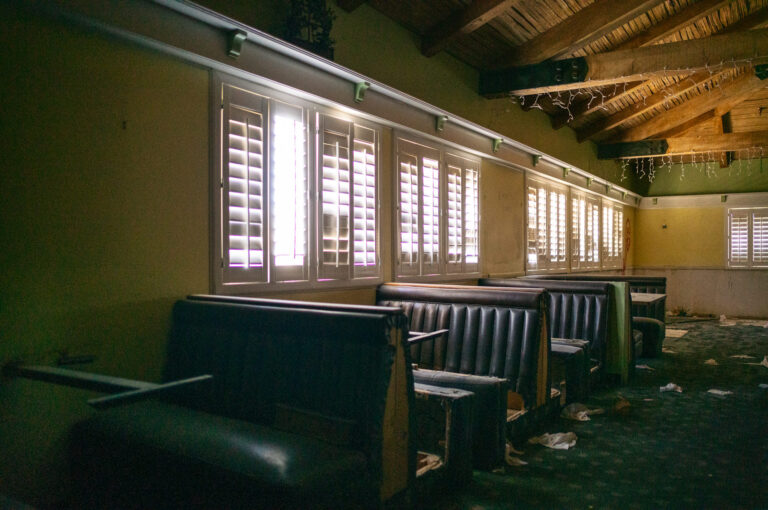
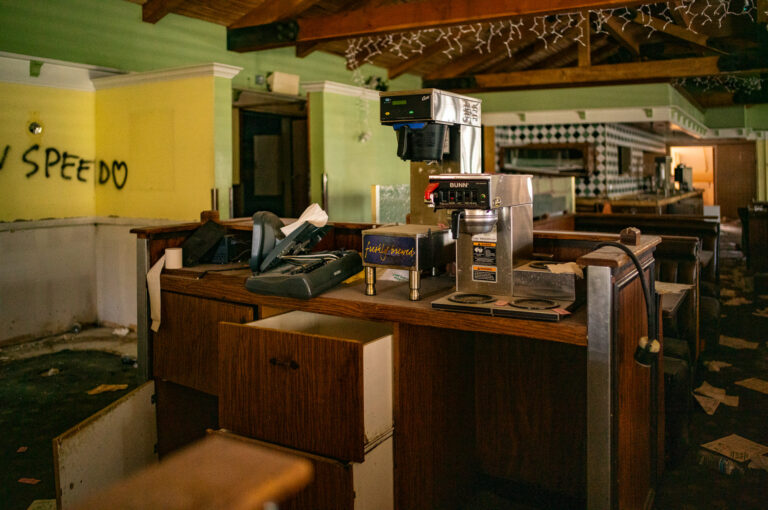
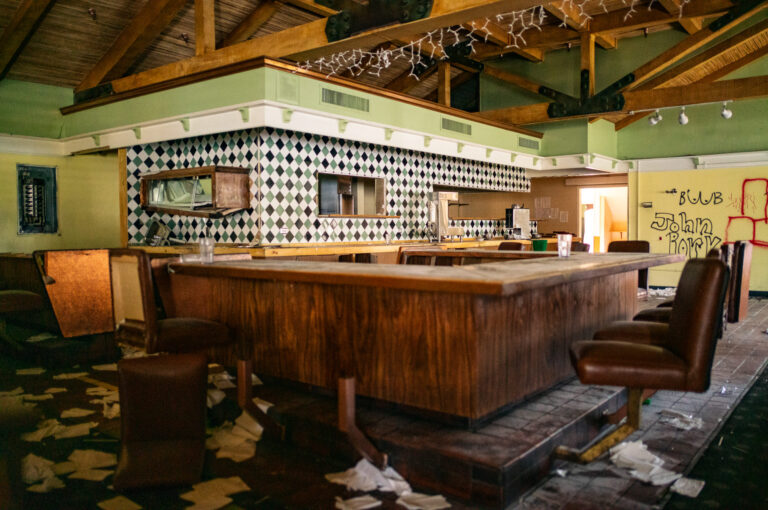
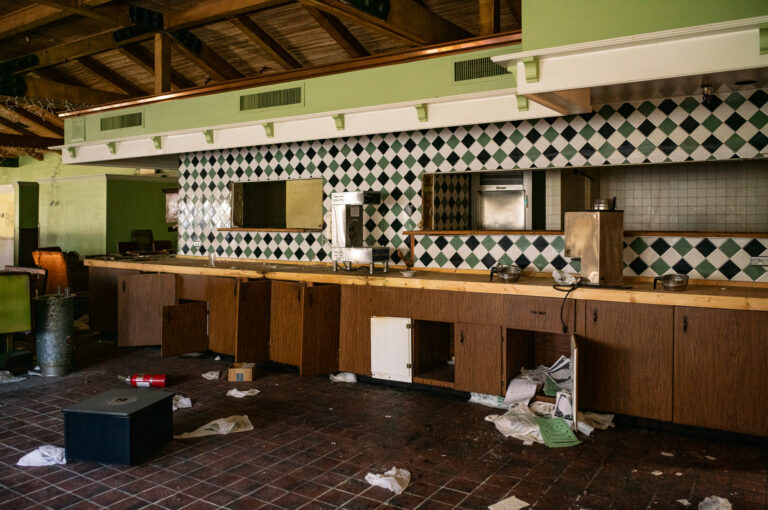
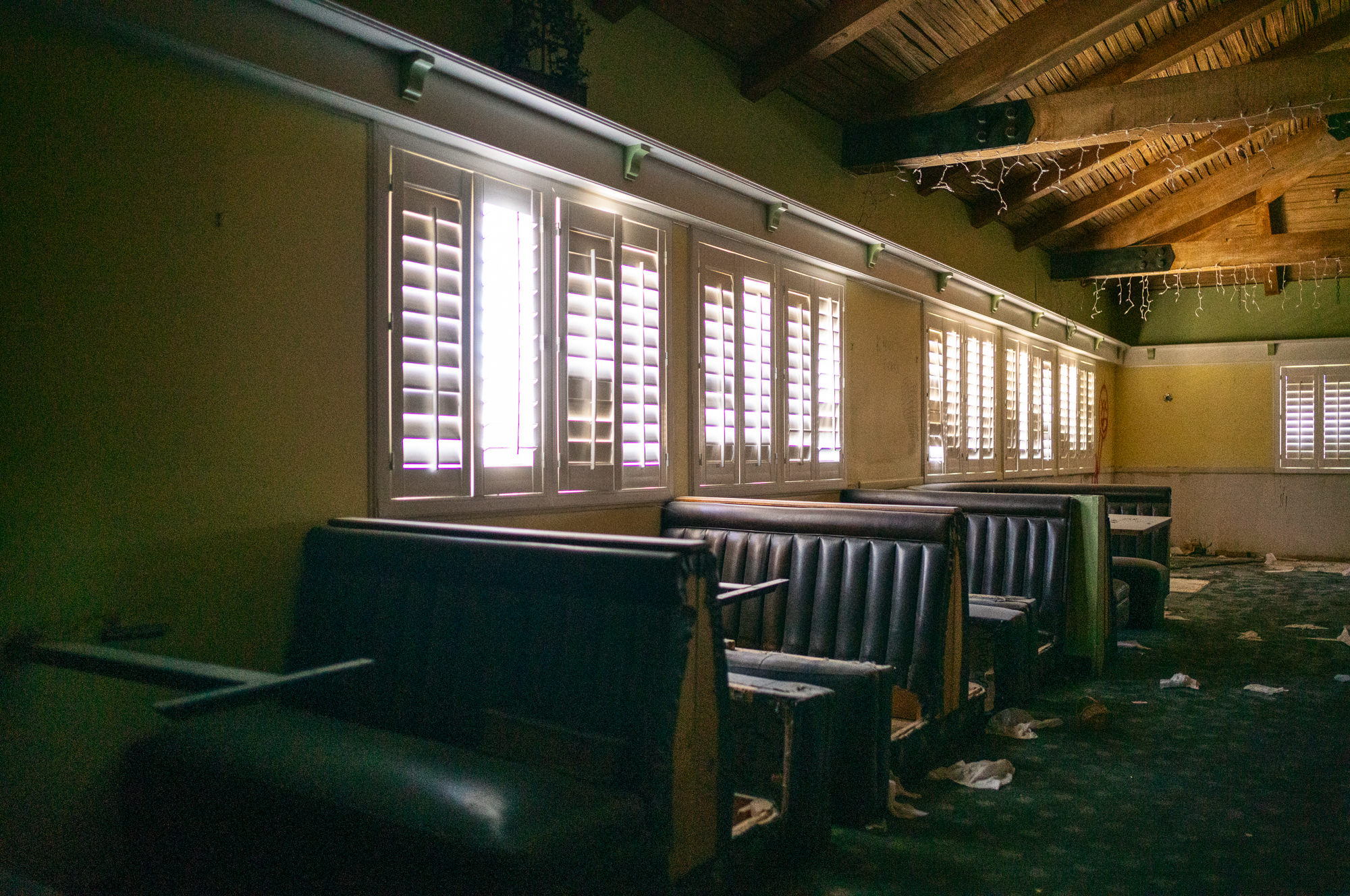
I walked in at high noon, which turned out to be the only lighting I needed. Light came through the windows, and through the places where the windows were no longer windows. Broken glass was everywhere. A lot of the panes had been knocked out.
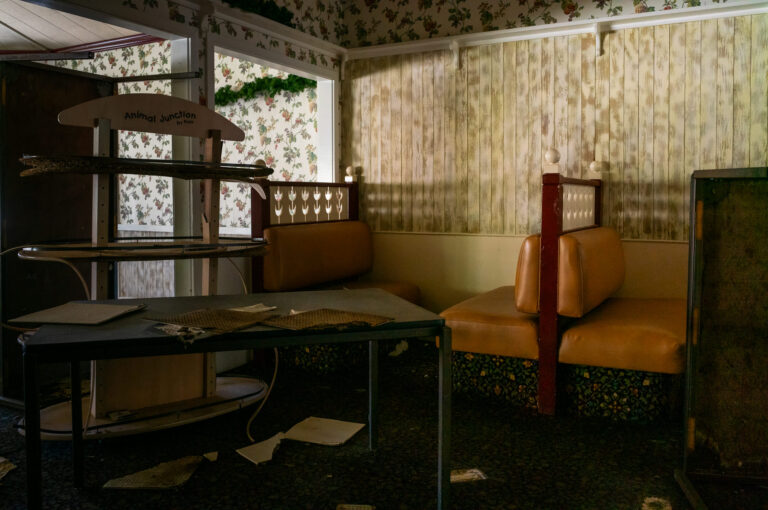
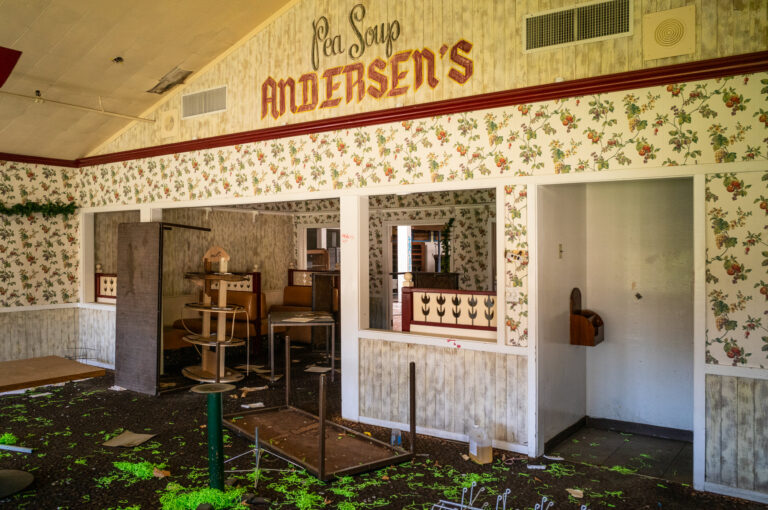
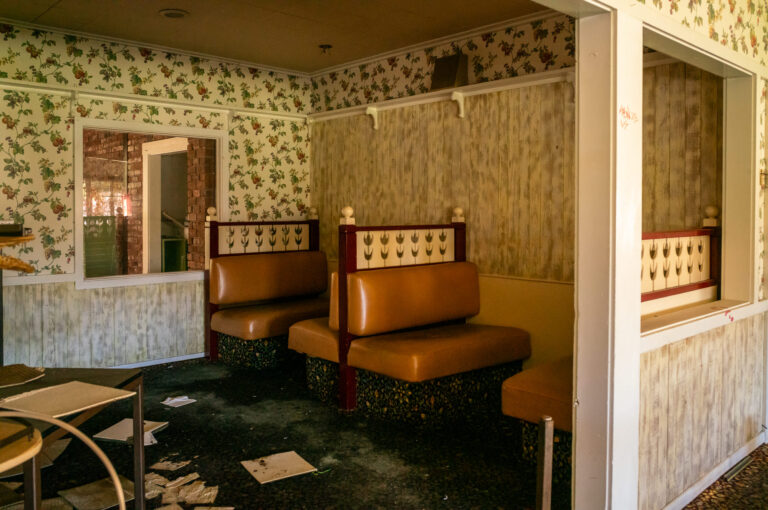
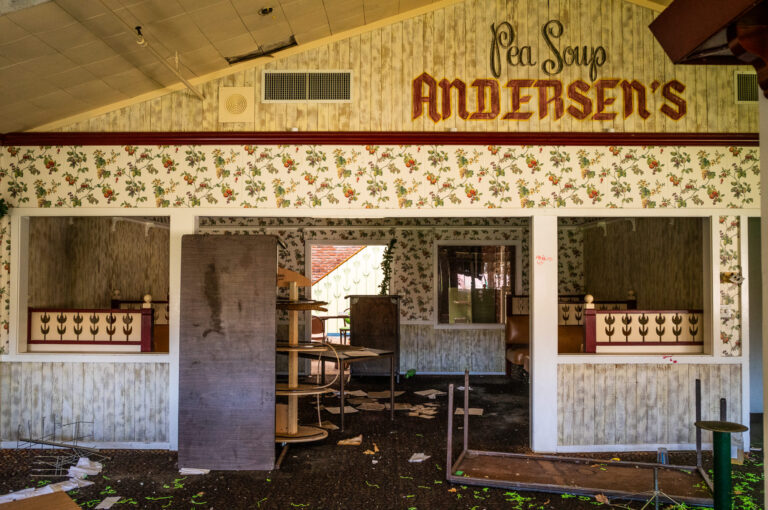
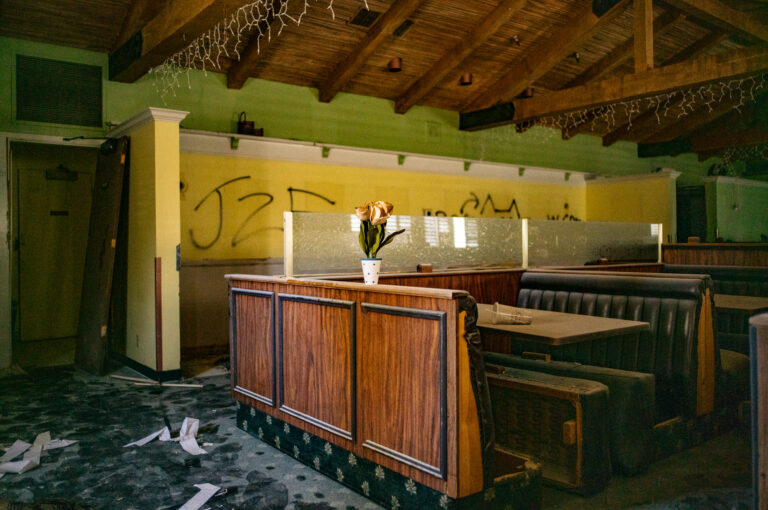
The booths were still bolted to the floor. The dining room tables carried a layer of dust thick enough to see across the room, and on one of them a couple of paper menus were still lying where somebody had left them.
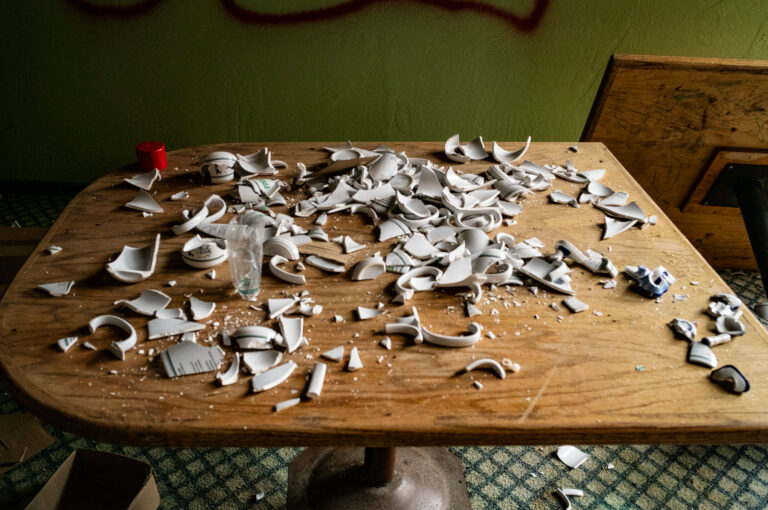
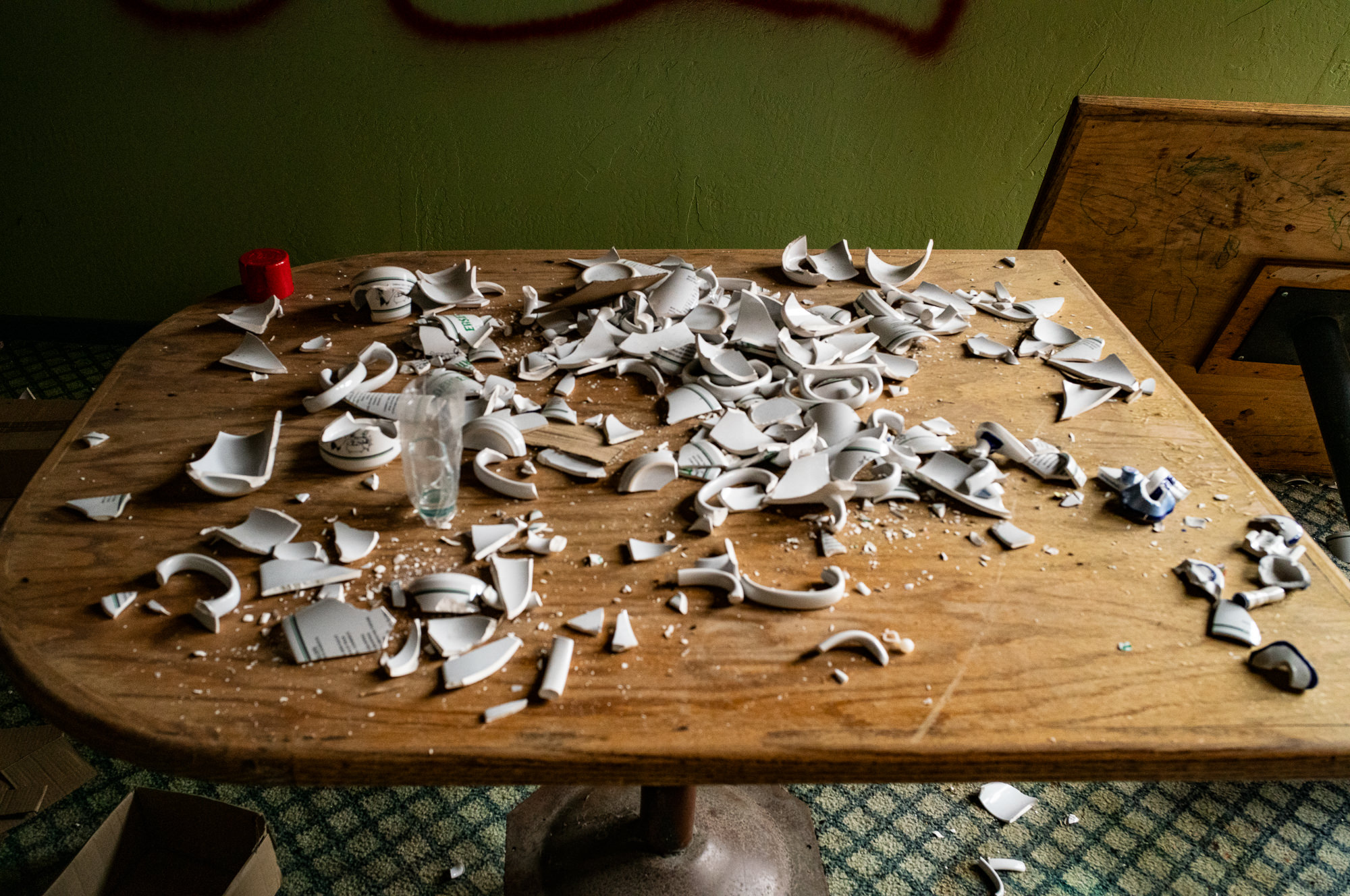
On another table, every one of the coffee mugs, the ones with the Pea Soup Andersen’s Buellton logo, had been smashed. Not swept off onto the floor. Smashed on the tabletop and left there in a pile of green and white ceramic. That frame is in the portfolio and I still do not know what to make of it.
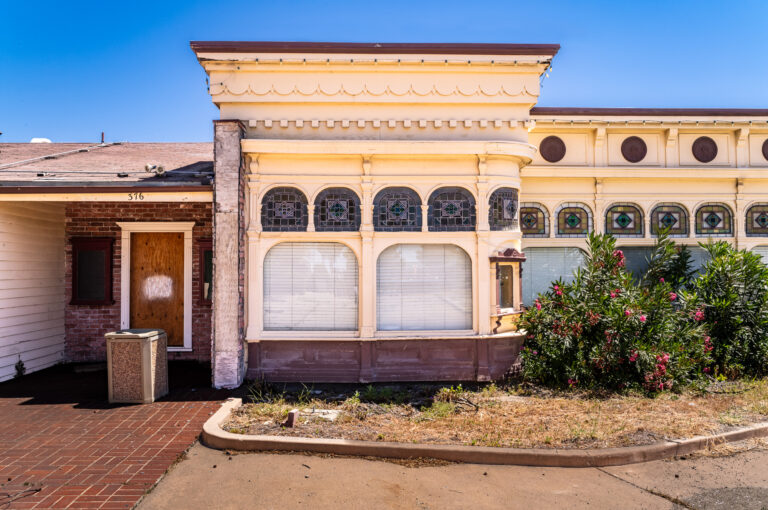
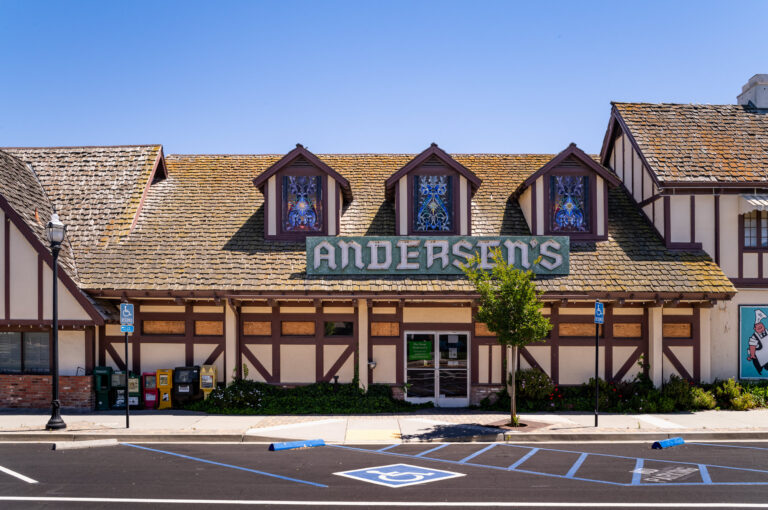
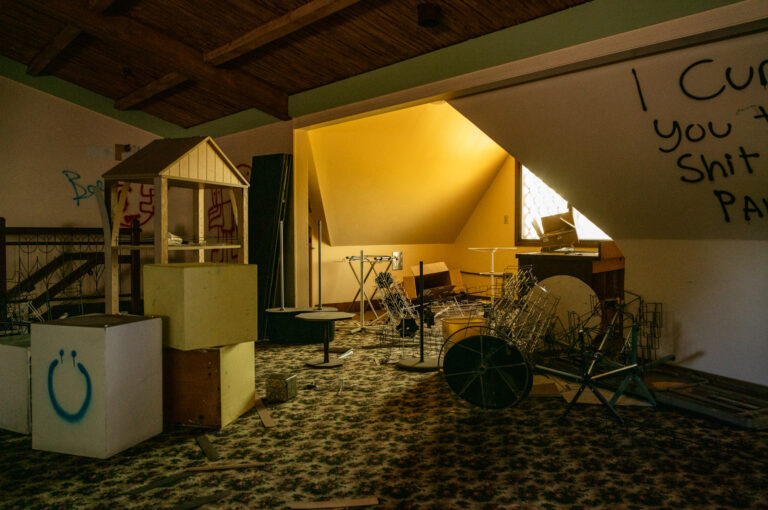
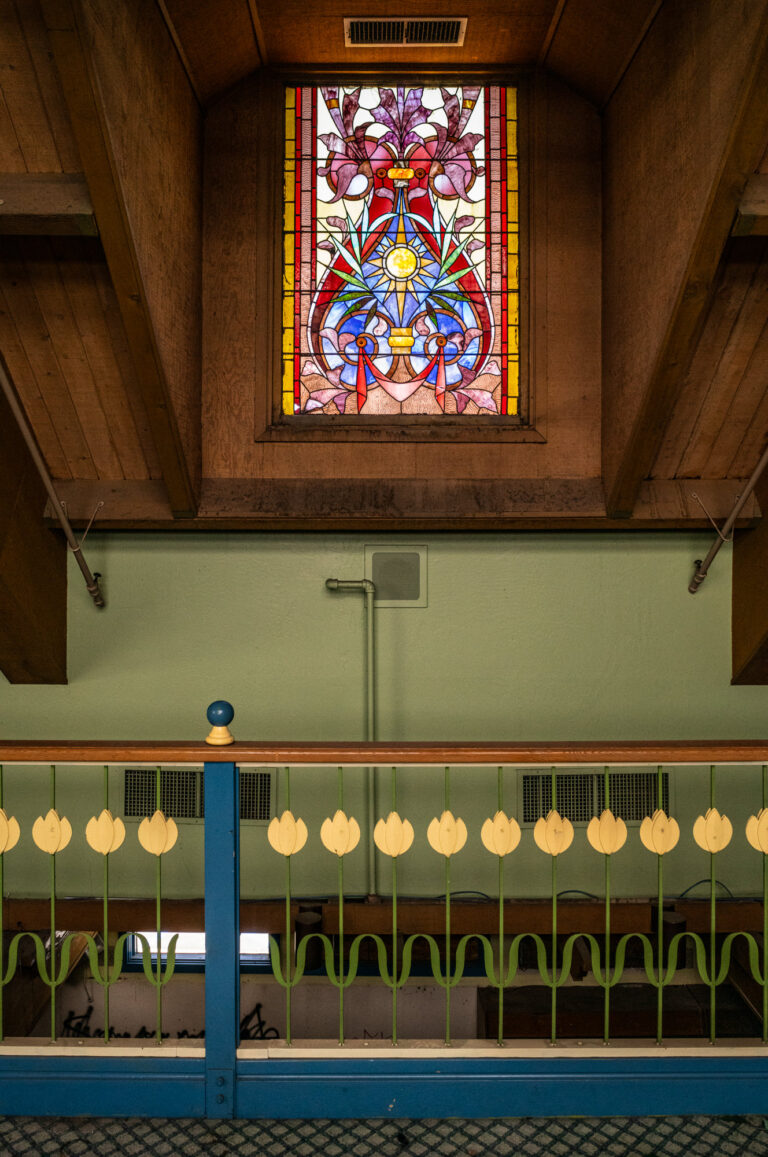
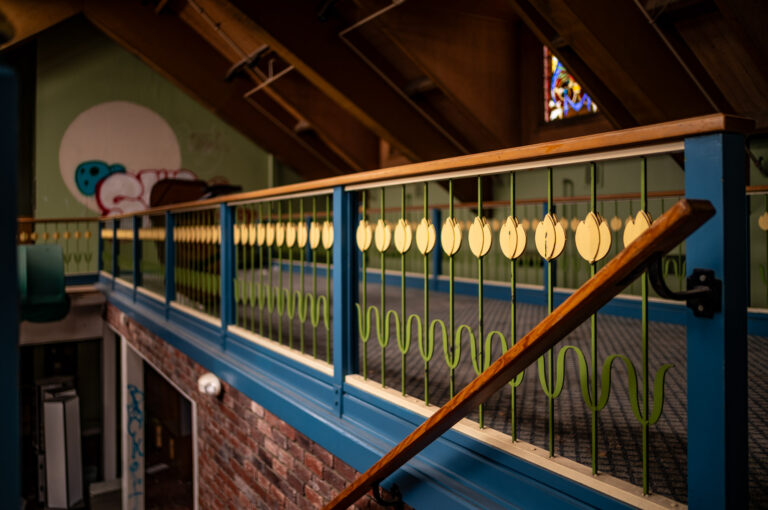
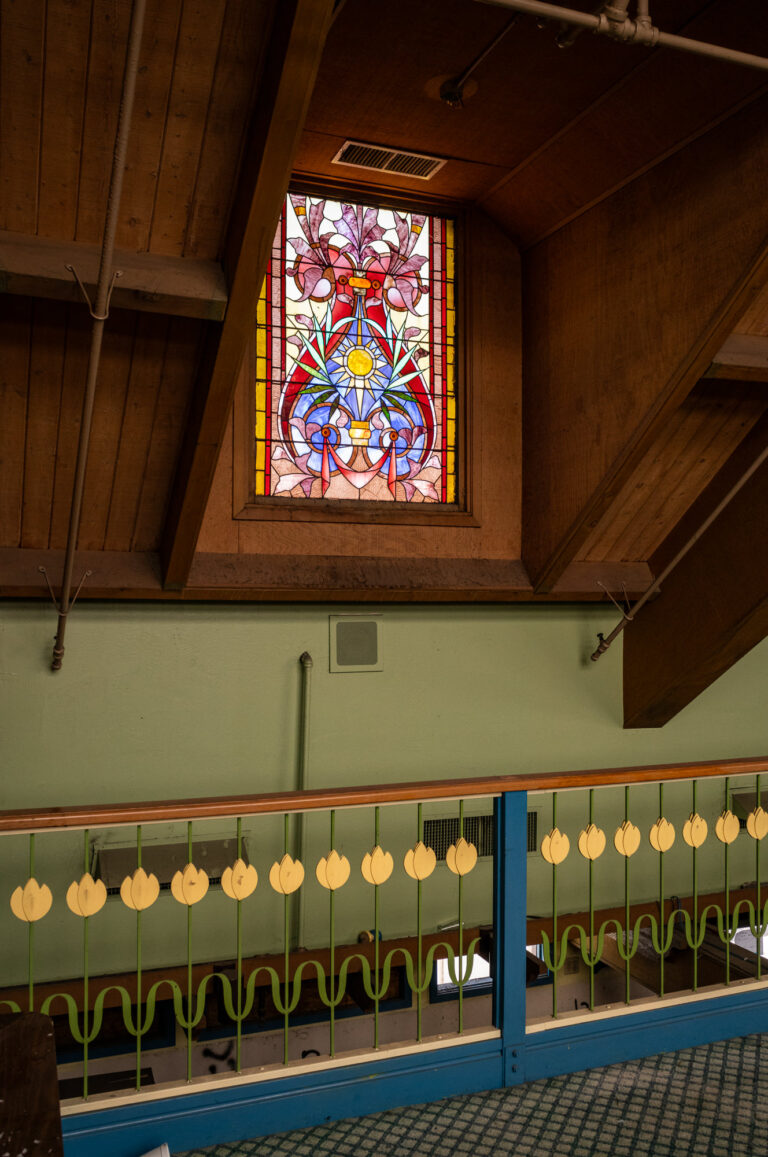
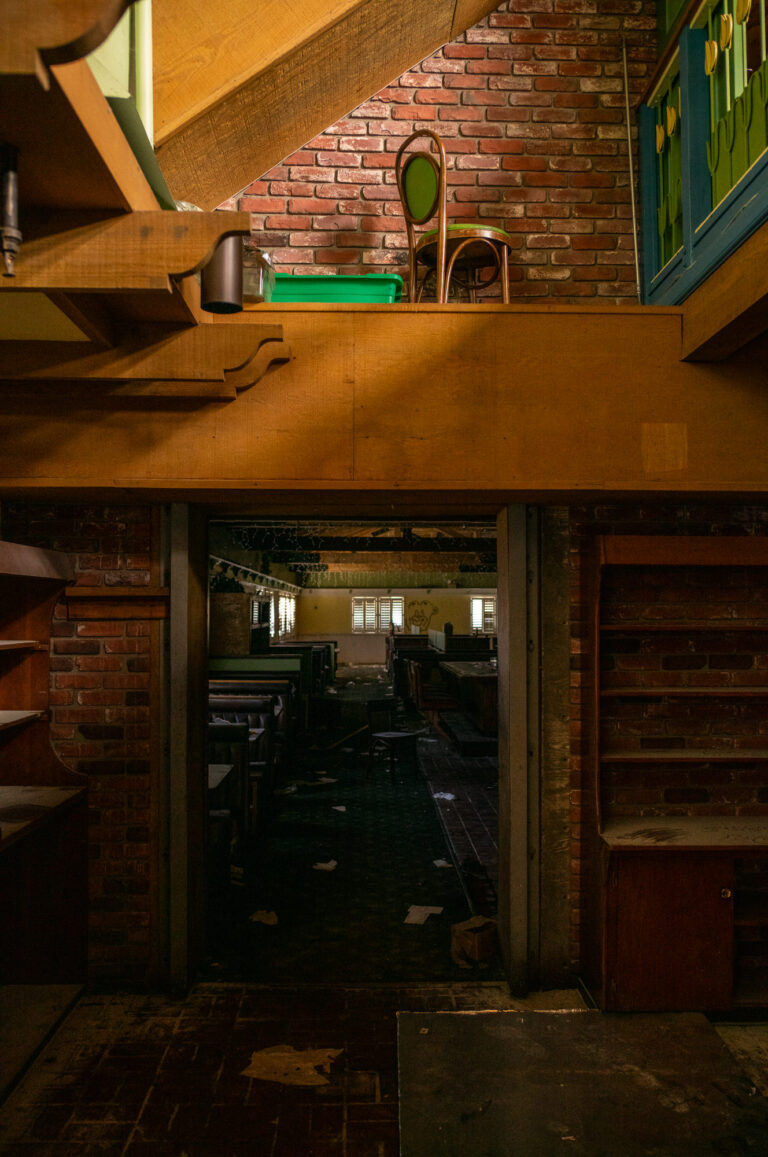
Upstairs, the stained glass was gorgeous. It caught the noon light and threw color into a room where nothing else had color left in it. I stood there wondering whether anyone was going to come take it out before the machines arrived.
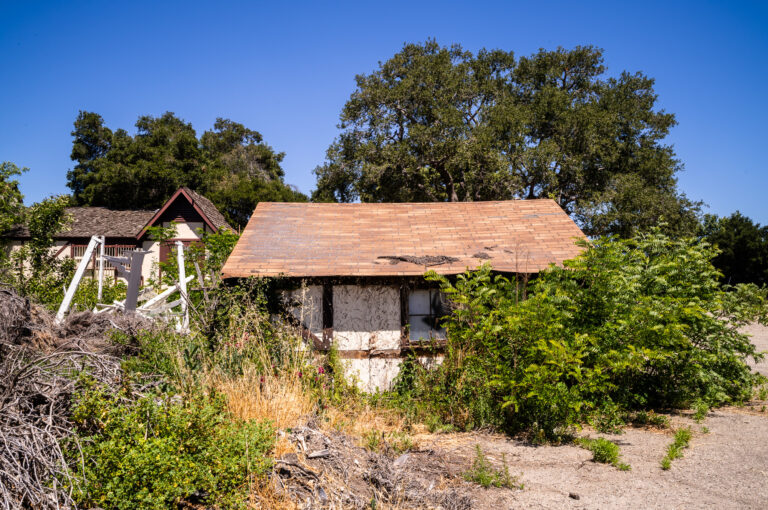
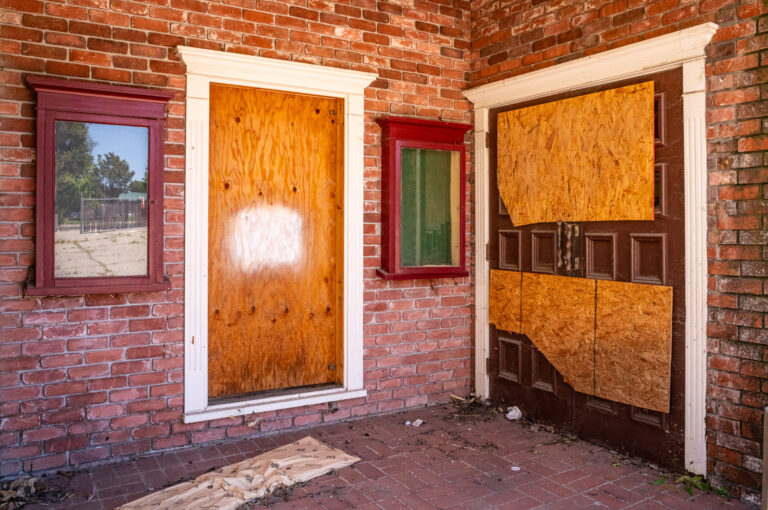
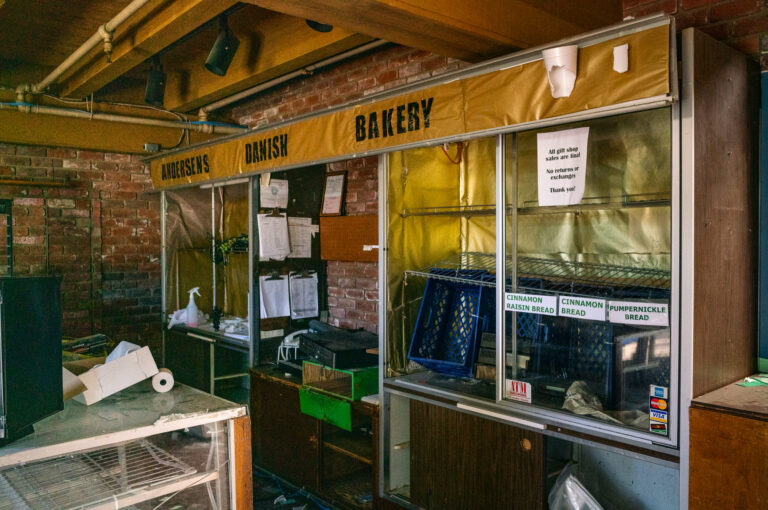
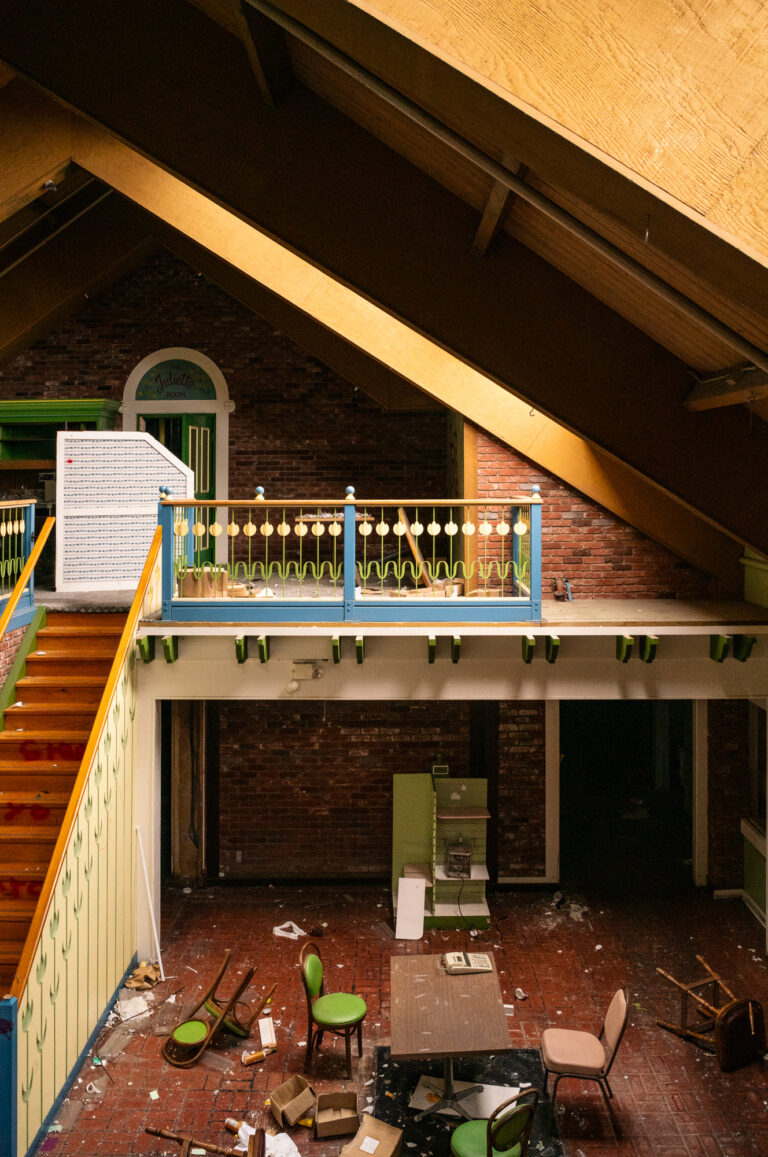
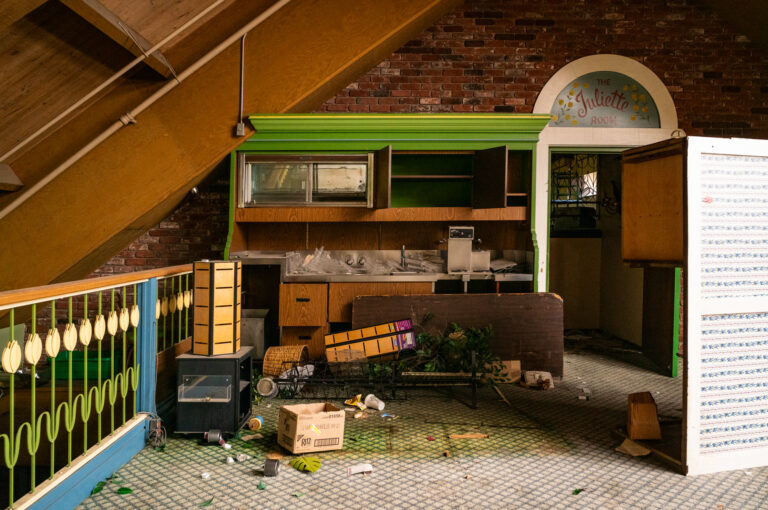
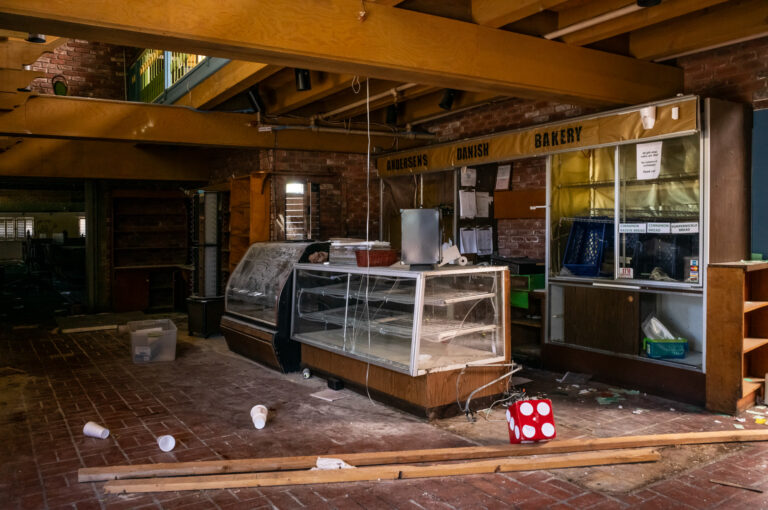
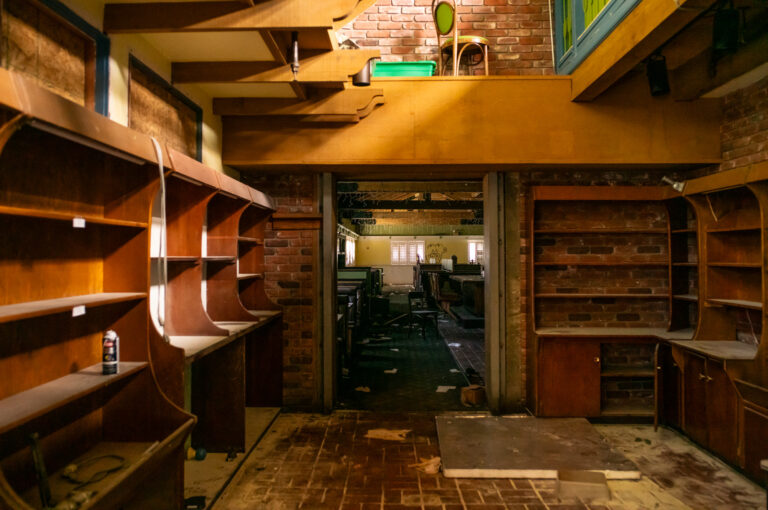
What looked like another restaurant on the property, possibly for events, was completely boarded up. But the restaurant itself, with its multiple floors, the gift shop and the To-Go bakery, was open all the way through, and there was more left behind than there should have been. A bare mattress still in one of the rooms. Some graffiti, but not much. No smell of urine, which surprised me.
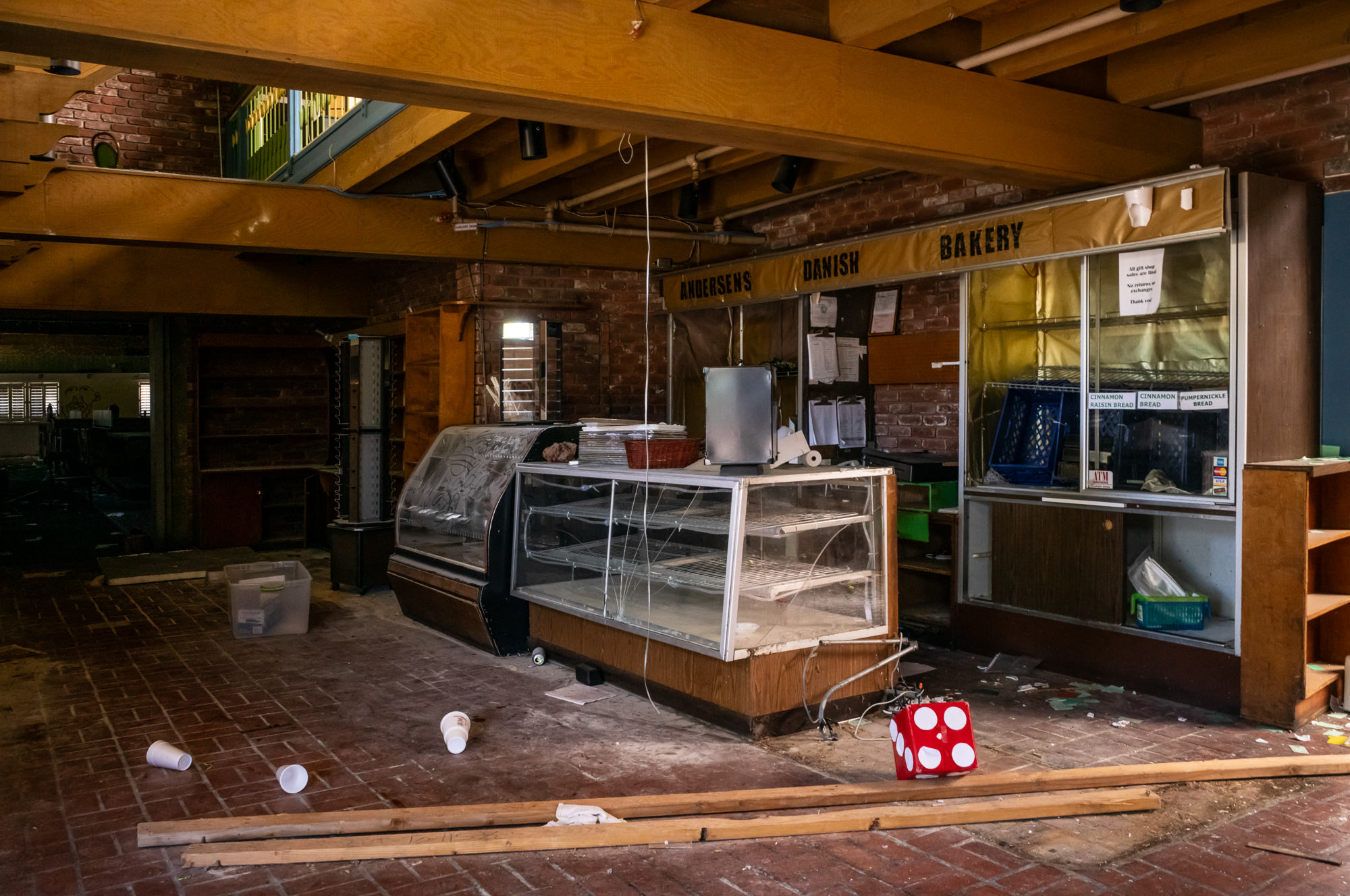
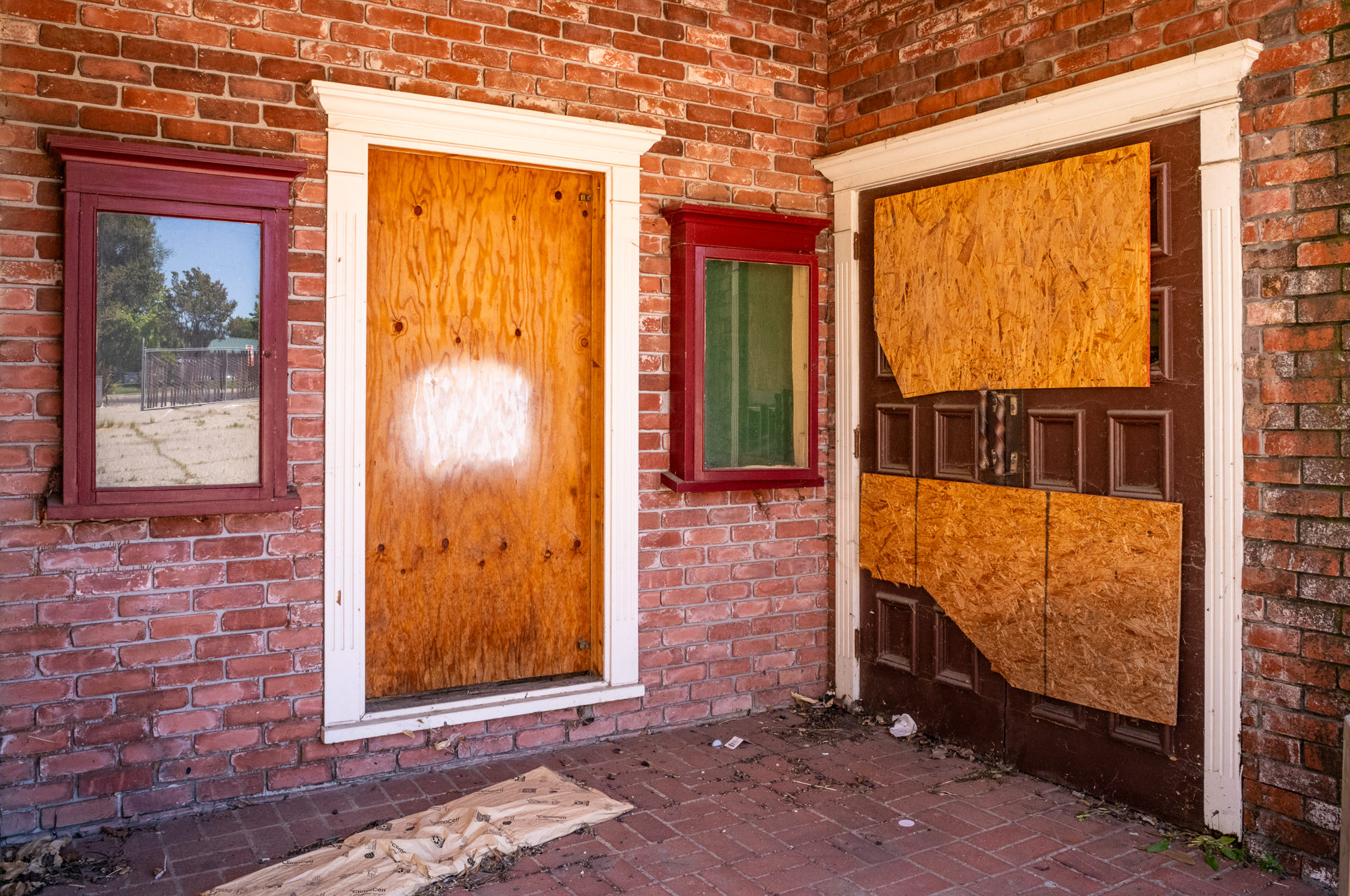
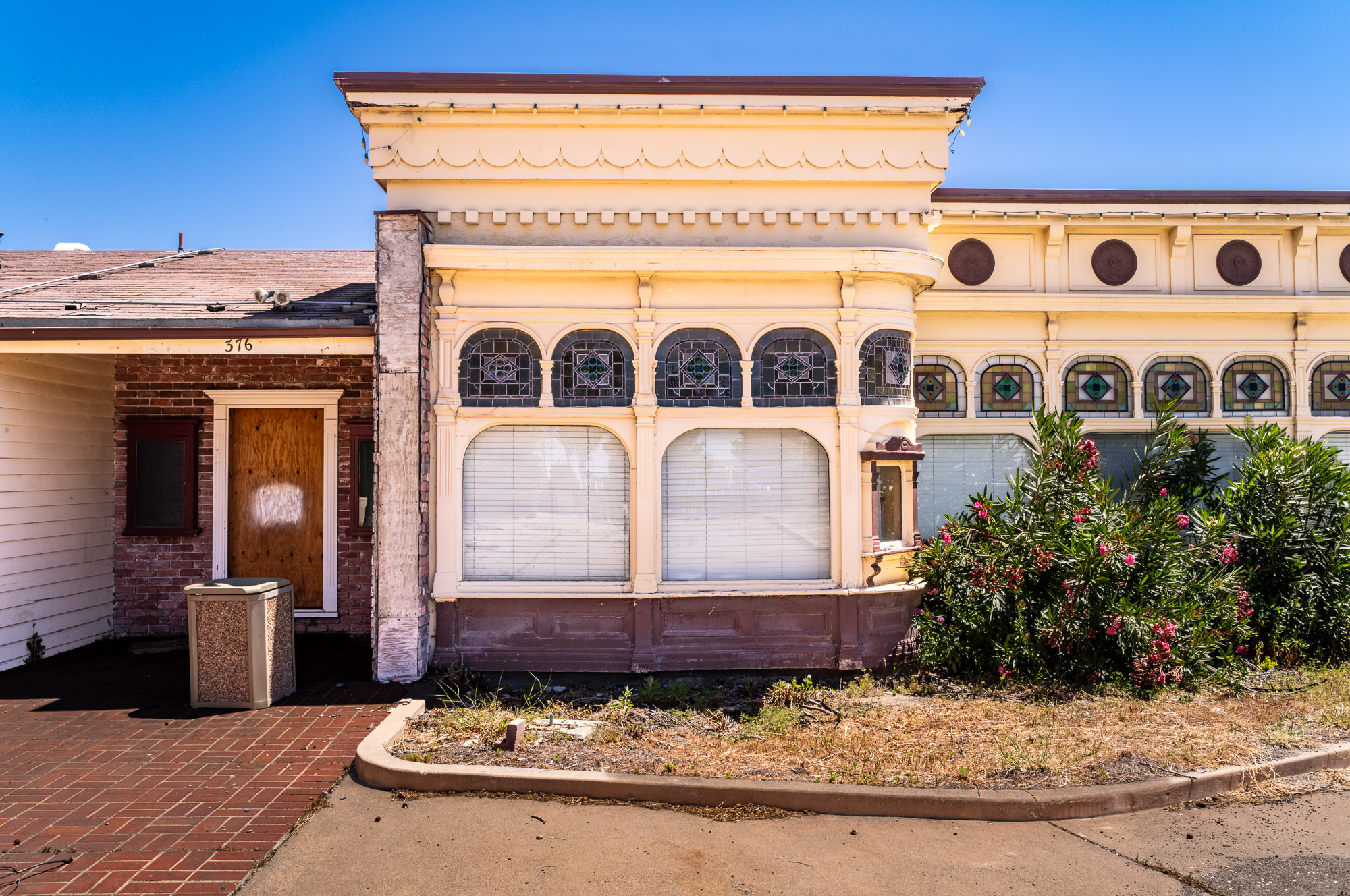
I spent most of that ninety minutes half braced for someone to come around a corner. I was certain the place was occupied, and I had already decided how I was going to react when somebody popped out and scared the daylights out of me. Nobody did. Nobody was there at all. Somehow that was worse.
Years ago I spent time in the Catskills, in what people called the Borscht Belt, where Jerry Lewis and Don Rickles and Dean Martin worked the rooms of resorts that are now collapsing into the woods. Standing in that dining room in Buellton felt exactly the same. A place that once had every seat filled, that people drove hours to reach, quietly turning back into materials.
I shot all of it on the M11, the 28 and the 50, everything in color. I thought about black and white and it just did not want to be black and white. The green of the mugs, the stained glass, the yellowing menus, the color was the evidence. I was working at fairly high ISO to hold shutter speeds handheld in a dark building, and there was noise, but a little correction in Lightroom cleaned it up and the files were otherwise beautiful.
I do not think I missed anything. I moved slowly for ninety minutes and I photographed everything I could reach.
One Door Open, One Door Down
By the time the Buellton City Council took the building up in July 2026, whatever restraint had been holding around the place was gone. The city manager told the council they had squatters and TikTok crews going in and out, that securing the property had proven ineffective, and that they wanted to avoid the building burning down and taking all of it with it, or somebody being killed inside. Then a councilmember named John Sanchez said, out loud, on the record, that he had gone in there himself that same day. He trespassed, he said. That door had been kicked down. The mayor asked whether there was any public comment before Sanchez incriminated himself further, and the room laughed.
The vote was five to nothing to strip the historic landmark protection from most of the structure. Only the 1928 Bueltmore section stays standing. The rooftop signs, the stained glass and the Hap-Pea and Pea-Wee murals are being saved. An office building, a gym and a courtyard are going in.
“The proposed project at the site “envisions a mixed-use building with commercial spaces on the ground floor along the street frontages and residential units on the upper floor,” reads Buellton’s website dedicated to the proposed project. “The plan includes 125 for-sale condominium units, offering a mix of one-bedroom and one-bedroom-plus-den layouts.” ~ SF Gate
Here is the part I find hardest to explain. I only ate there once. I had the soup and did not think much of it. Connie had been there thirty years ago, when she first moved to California. A friend of mine, a vegetarian, stopped for a bowl every single time he drove north to Oregon, without fail, for years.
So it was never really about the soup. It was about the fact that it was there, and that it had been there before any of us, and that you could count on it.
I am having the menu framed.●
Five Months Short of 100 Years ●
Shot on a Leica
Click any image to enlarge